3D Printer
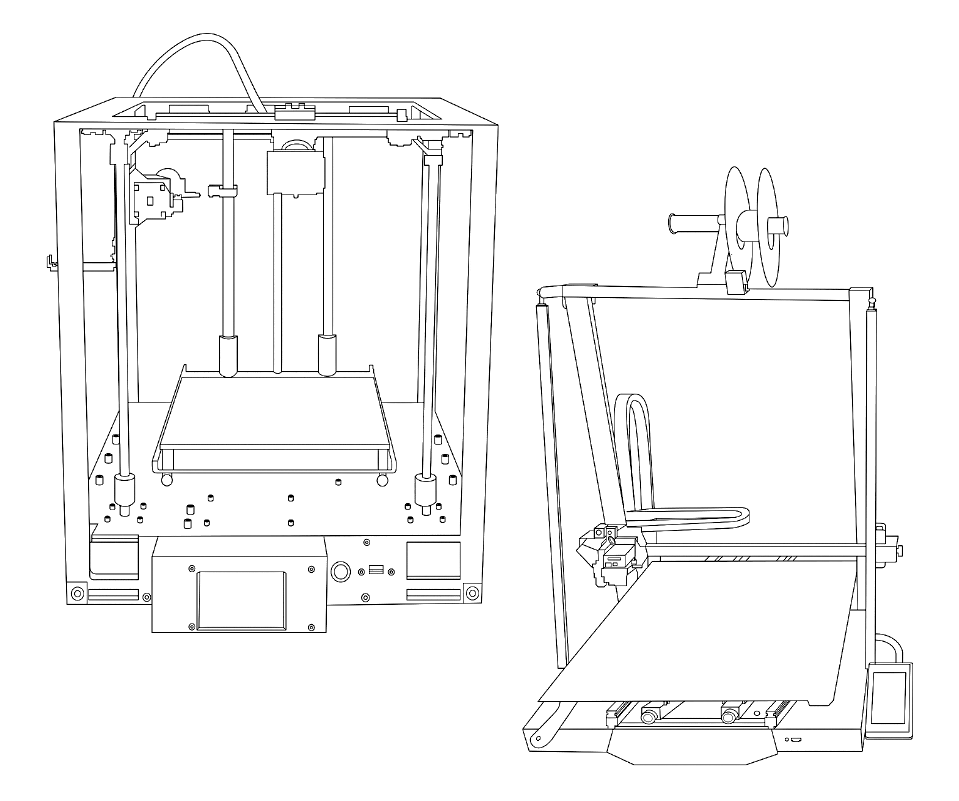
Currently, the laboratory has six 3D printers, distributed across three different technologies. Three of them use FDM (fused deposition modeling) technology and are responsible for manufacturing most of the parts used in the laboratory, ranging from the production of sensor calibration supports to the manufacture of functional parts applied directly in centrifuge tests.
The printing workshop also includes a composite printer that combines CFR (continuous fiber reinforcement) and FDM technologies, enabling the manufacture of components with high mechanical strength, comparable to 6061 aluminum. This performance is achieved by incorporating reinforcing fibers into the structure of the parts, strategically positioned to increase strength and mitigate stress concentrations, based on prior finite element analyses performed in 3D modeling software.
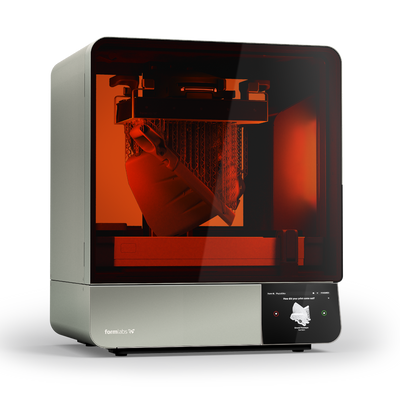
Finally, the laboratory has a resin printer that integrates LFD (low force display) and SLA (stereolithography) technologies, capable of producing parts with isotropy and excellent mechanical properties, as well as enabling the manufacture of components in flexible and transparent materials, significantly expanding the range of experimental applications.
Currently, the laboratory has six 3D printers, distributed across three different technologies. Three of them use FDM (fused deposition modeling) technology and are responsible for manufacturing most of the parts used in the laboratory, ranging from the production of sensor calibration supports to the manufacture of functional parts applied directly in centrifuge tests.
The printing workshop also includes a composite printer that combines CFR (continuous fiber reinforcement) and FDM technologies, enabling the manufacture of components with high mechanical strength, comparable to 6061 aluminum. This performance is achieved by incorporating reinforcing fibers into the structure of the parts, strategically positioned to increase strength and mitigate stress concentrations, based on prior finite element analyses performed in 3D modeling software.
Finally, the laboratory has a resin printer that integrates LFD (low force display) and SLA (stereolithography) technologies, capable of producing parts with isotropy and excellent mechanical properties, as well as enabling the manufacture of components in flexible and transparent materials, significantly expanding the range of experimental applications.
Filament Printers
CR-M4
xxBrand: Creality
Year of installation: 2023
| Parameter | Values |
|---|---|
| 3D Printer Technology | FDM – Fused Deposition Modeling |
| Filament compatibility | PLA, ABS, TPU, Nylon e PETG |

Filament Printers
CR-M4
xx
Brand: Creality
Year of installation: 2023
| Parameter | Values |
|---|---|
| 3D Printer Technology | FDM – Fused Deposition Modeling |
| Filament compatibility | PLA, ABS, TPU, Nylon e PETG |
Sapphire Pro SP-3
Brand: TwoTrees
Year of installation: 2021
| Parameter | Values |
|---|---|
| 3D Printer Technology | FDM – Fused Deposition Modeling |
| Filament compatibility | ABS, PLA, PETG e TPU |

Sapphire Pro SP-3

Brand: TwoTrees
Year of installation: 2021
| Parameter | Values |
|---|---|
| 3D Printer Technology | FDM – Fused Deposition Modeling |
| Filament compatibility | ABS, PLA, PETG e TPU |

Composite Printing
Mark Two
Brand: Markforged
Year of installation: 2025
| Parameter | Values |
|---|---|
| 3D Printer Technology | FDM – Fused Deposition Modeling e CFR – Continuous Fiber Reinforcement |
| Supported Materials | Precision PLA, Onyx, TPU, and Nylon |
| Supported Fibers | Carbon, Glass, and Kevlar |
Composite Printing
Mark Two

Brand: Markforged
Year of installation: 2025
| Parameter | Values |
|---|---|
| 3D Printer Technology | FDM – Fused Deposition Modeling e CFR – Continuous Fiber Reinforcement |
| Supported Materials | Precision PLA, Onyx, TPU, and Nylon |
| Supported Fibers | Carbon, Glass, and Kevlar |
Resin PRINTING
Form 4L
Year of installation: 2025
| Parameter | Values |
|---|---|
| 3D Printer Technology | LFD – Low Force Display
SLA – Stereolithography |
| Supported Materials | High-performance resins,
flexible resins, transparent resins |
Resin PRINTING
Form 4L

Brand: Formlabs
Year of installation: 2025
| Parameter | Values |
|---|---|
| 3D Printer Technology |
LFD – Low Force Display SLA – Stereolithography |
| Supported Materials |
High-performance resins, flexible resins, transparent resins |
The integration of three-dimensional modeling (CAD) and 3D printing with centrifuge modeling emerged as a response to a central problem in small centrifuge modeling: the need for compact, highly specialized parts capable of withstanding macro-gravitational conditions, which are rarely available on the market or in traditional manufacturing processes.
In this context, the combination of these techniques enabled the in-house development and manufacture of parts with specific geometries and performance suited to the test conditions, substantially transforming the preparation of experimental setups. This approach reinvented the laboratory's work dynamics, providing greater agility, flexibility, and autonomy, and making it virtually independent of external manufacturing processes.
The integration of three-dimensional modeling (CAD) and 3D printing with centrifuge modeling emerged as a response to a central problem in small centrifuge modeling: the need for compact, highly specialized parts capable of withstanding macro-gravitational conditions, which are rarely available on the market or in traditional manufacturing processes.
In this context, the combination of these techniques enabled the in-house development and manufacture of parts with specific geometries and performance suited to the test conditions, substantially transforming the preparation of experimental setups. This approach reinvented the laboratory's work dynamics, providing greater agility, flexibility, and autonomy, and making it virtually independent of external manufacturing processes.
Our Equipment
Consolidometer

Centrifuges
3D Printer
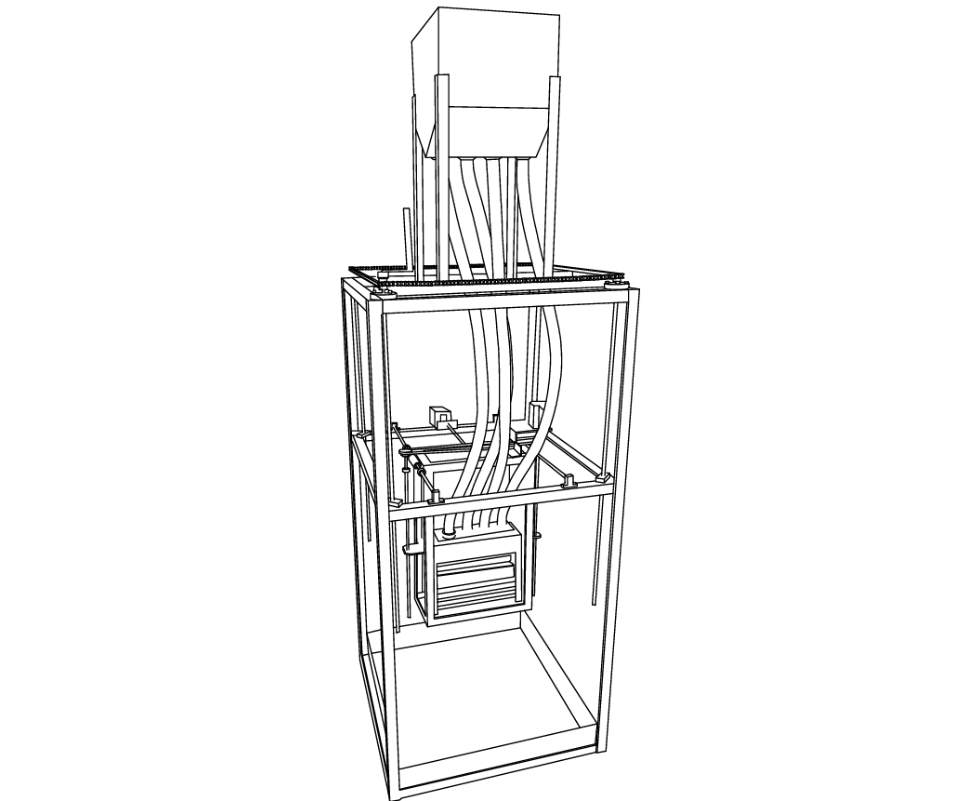
Automatic sand pluviator
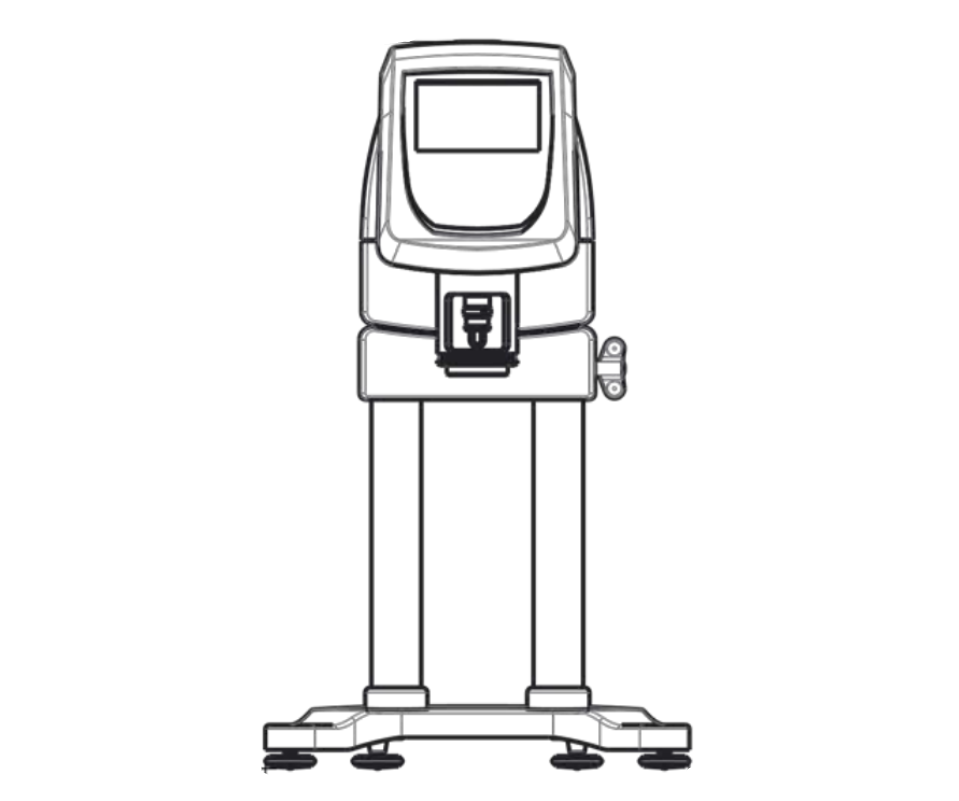
Rheometer
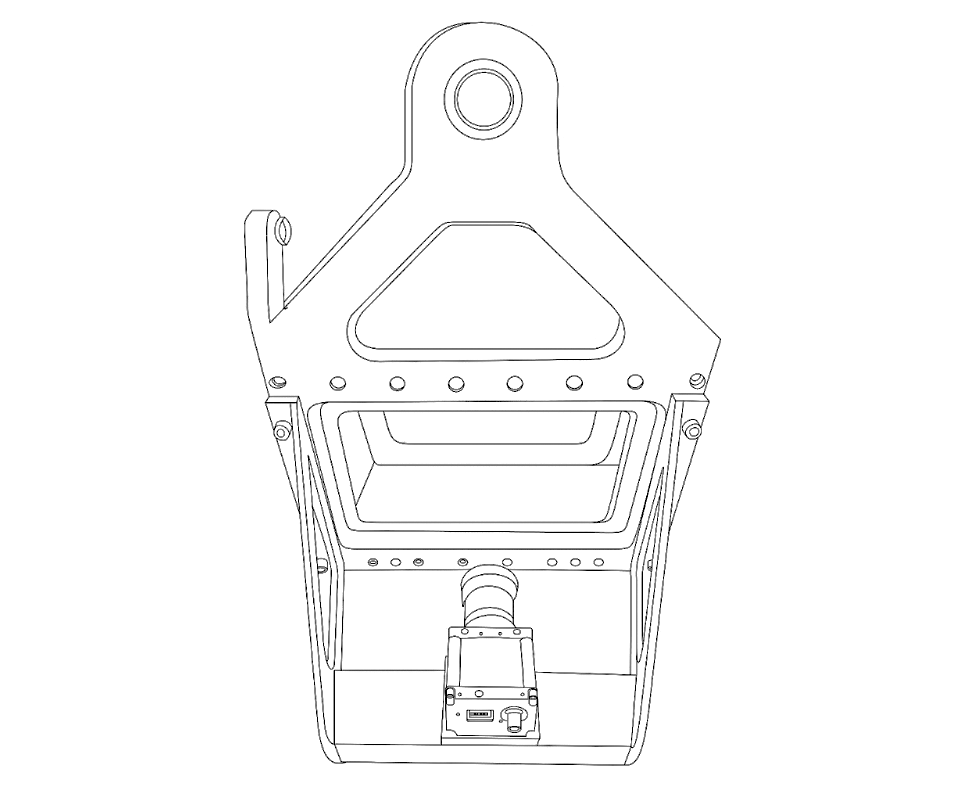
PIV system
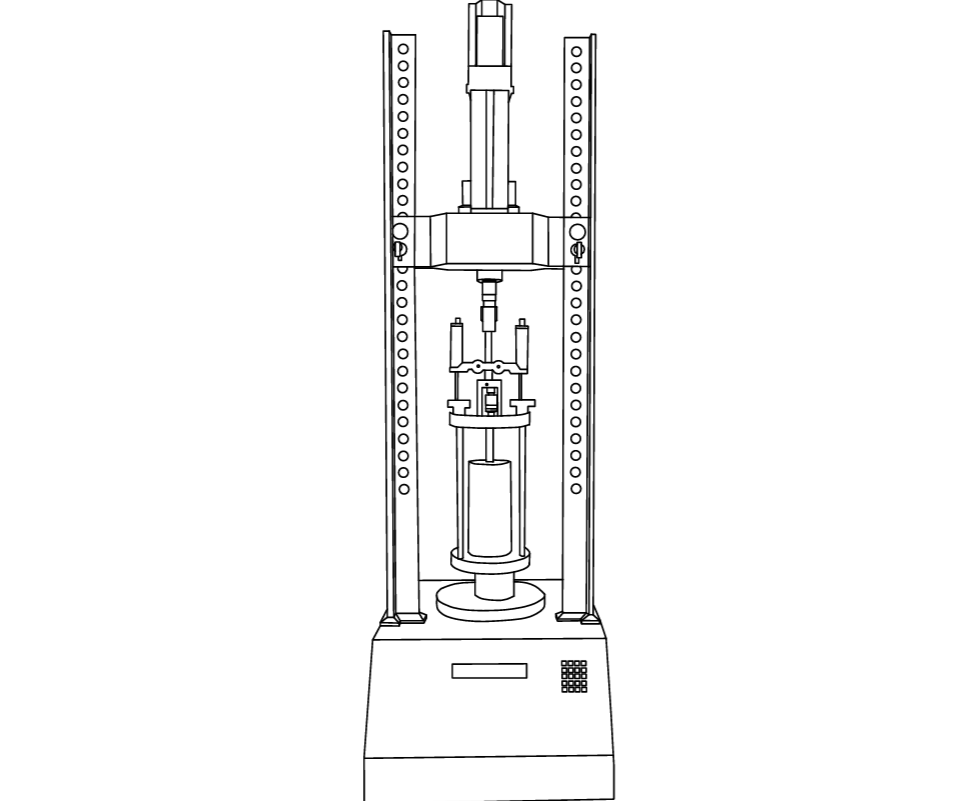
Triaxial